Overview
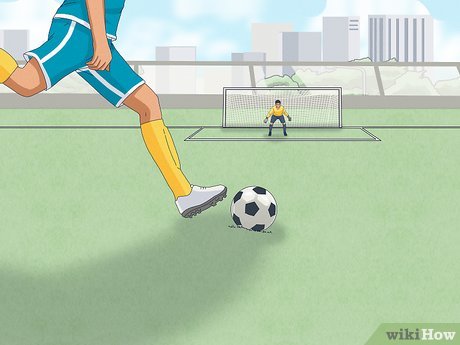
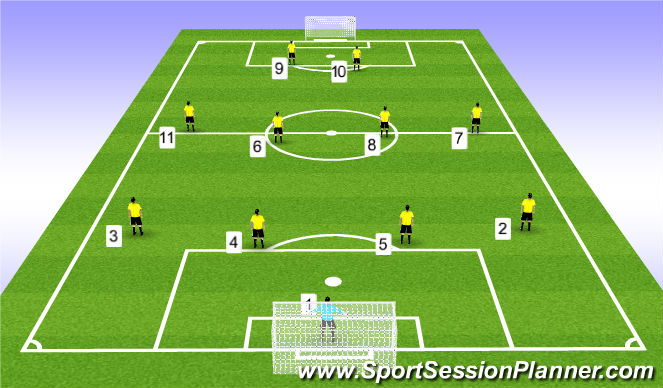
A soccer team consists of 11 players: one goalkeeper and 10 outfielders (defenders, midfielders, and forwards). While formations vary (e.g., 4-4-2, 4-3-3), the primary positions are Goalkeeper, Left/Right Backs, Center Backs, Defensive/Central/Attacking Midfielders, and Forwards/Wingers.
Goalie
The goalkeeper is the specialized last line of defense in soccer, tasked with preventing the opposing team from scoring by blocking shots, commanding the penalty box, and organizing defenders. As the only player permitted to use their hands within their own penalty area, they must possess elite reflexes, mental toughness, and communication skills. Modern goalkeepers also initiate attacks through precise distribution, acting as the first line of offense.
The main goal is to stop the ball from entering the net by blocking, catching, or punching it away. Within their own 18-yard box, they can use their hands, but they are treated as normal field players outside this area. Goalkeepers direct defenders, set up walls for free kicks, and command the box during corner kicks. After making a save, they quickly distribute the ball to teammates via throwing or kicking to start counterattacks. Essential for reacting instantly to fast, close-range, or deflected shots. Proper positioning in relation to the ball and goal helps minimize the shooting angle for attackers. High-level hand-eye coordination for catching, plus composure with their feet to pass under pressure.
defense
Defensive positions in soccer, primarily center-backs and fullbacks, form the organized backline responsible for protecting the goal, reducing space, and stopping opponent attacks. They utilize disciplined, side-on stances to pressure attackers, read the game to intercept passes, and communicate constantly to maintain structural integrity. Effective defenders combine physical strength, agility, and tactical awareness to regain possession, often initiating counter-attacks after breaking up play.
The main goal is to keep "clean sheets" (shutouts) by stopping attackers from creating scoring chances.When losing possession, defenders immediately slow down the opposition, giving teammates time to get back and help.: Defenders stay "goal side" (between the attacker and their own goal) and try to push opponents toward the sidelines and away from the center.: Constantly talking to teammates to organize marking and track runners. In modern soccer, defenders also help initiate offensive plays by passing the ball forward after regaining possession. In modern soccer, defenders also help initiate offensive plays by passing the ball forward after regaining possession.

Midflied
The midfield position is widely considered the engine room of a soccer team, acting as the crucial link between the defensive line and the forwards. Occupying the center of the pitch, midfielders are responsible for controlling the game's tempo, breaking up opposition attacks, and initiating offensive plays. They possess immense stamina, requiring high-level technical skills in passing, ball control, and tackling, while covering more ground than almost any other position. Whether playing as a defensive, central, or attacking midfielder, these players must display high situational awareness to dictate the flow of the match and transition seamlessly between offense and defense.
Midfielders dictate the pace of play, deciding when to speed up or slow down the match. They receive the ball from defenders and distribute it to attackers. They break up opposing attacks, make tackles, and intercept passes. They work in the middle third of the field, often covering the area between both penalty boxes. 6): Prioritizes protecting the backline, breaking up play, and holding possession. 8): A box-to-box player who works on both defense and offense. (No. 10): Positioned behind the forwards, focused on setting up goals and creating scoring opportunities.
striker
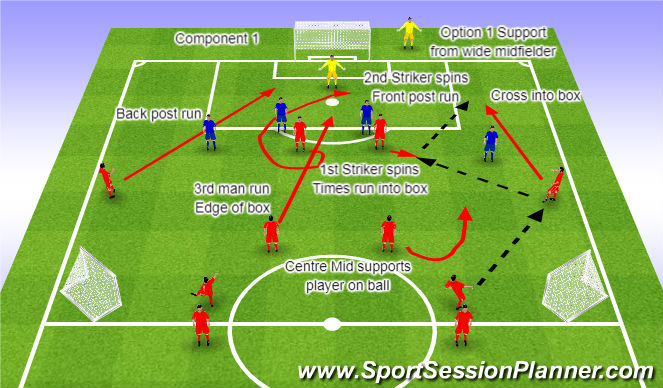
A striker (often the no. 9) is the primary goal-scorer in soccer, positioned closest to the opponent’s goal to spearhead the attack. They require a blend of speed to run behind defenders, strength to hold up play, and clinical finishing skills to convert chances into goals. Beyond scoring, modern strikers must press opponents, create space, and possess high technical intelligence to, for instance, execute precise shots or quick, one-on-one moves.
The primary objective is to convert opportunities into goals, requiring clinical finishing, anticipation, and composure in the penalty box. Using speed and movement to get behind the defensive line or find space between defenders to receive passes. In modern soccer, strikers often start the defensive effort by "high pressing" to force errors from defenders and goalkeepers. Occupying central defenders to drag them out of position, which opens up passing lanes or space for midfielders and wingers to attack.